FAQs
CBT is an evidence-based therapy that has been found to be effective in treating young people struggling with a variety of common mental health difficulties both 1:1 and via parents. For more information go to our CBT page to find out how CBT works and which conditions it can be used to treat.
Therapy sessions are usually 50 minutes long. CBT sessions are tailored to each individual and involves collaboration between the therapist and the young person. However, some features that are common amongst all sessions are, coming up with a plan for what to do that session, looking at current progress, doing activities to help work towards your goals and thinking about how to carry on your progress between sessions.
The level of parental involvement varies due to different young people needing different levels of parental support. Parents are heavily involved in the assessment process and regular check-ins (roughly every 6 weeks) are provided throughout the intervention. These are to find out parent’s opinions and observations as well as inform parents of how to help. The sessions are confidential so no session content will be shared with parents unless we are concerned about the safety of the young person. Parents will be able to contact at any time via the communication channels provided if they feel there is necessary information to pass on to the therapist. Go to our Parents page for more information.
Adolescence, as defined by the World Health Organisation (WHO) ends between the ages of 18-24 as research suggests that brain development and the process of becoming an ‘adult’ extends beyond the usual range of ‘teen’ years. It is also worth noting that young people up to this age face a lot of similar challenges to those of teenagers and still require a similar level of support. Additionally, neurodivergent young people of up to this age may be at a developmental stage which reflects that of earlier years and should be supported as such. Check our young adults page for more information.
Yes! We pride ourselves on providing neurodivergent affirming therapy. Neurodivergent affirming therapy is an approach which respects neurodivergent differences as a part of their identity rather than a condition to be cured and works to differentiate between symptoms of neurodivergence and symptoms of mental health difficulties.
CBT is a highly adaptable evidence-based approach to treating mental health difficulties which can be just as effective for neurodivergent young people as neurotypical young people. Effective CBT takes a ‘flexibility within fidelity’ approach meaning that there is an ability to adapt all traditional aspects of CBT delivery whilst ensuring the mental health issues are still treated in line with the evidence-base.
It is important that neurodivergent affirming therapy is completely young-person centred and delivered by therapists who have knowledge and experience in working with neurodivergent young people such as within our service. Check out our neurodivergent affirming therapy page here.
To get started, please book your free consultation here. Following this, we will be able to decide next steps.
Initial consultation: Free (scroll down to book)
Assessment Session: 90 minutes – £120
Includes 60 minutes 1:1 with young person and 30 minutes with parent(s)/carer(s)
Assessment Session 18+: 60 minutes – £90
Cognitive Behavioural Therapy (CBT): £70 (60 minute session)
Mentoring: 45 minutes – £55
Parent Consultation: 45 minutes – £45
Telephone or video call (Zoom)
Letters/Reports: £40
Concessions: There are a limited number of openings on a sliding scale pricing system available for families who rely on government assistance (including free school meals) or self-funding university students. Please contact for further information.
Block Booking: There are discounts available for booking 6 sessions or more in advance for both mentoring and CBT. Please contact for further information.
Does online therapy work for young people?
In most cases, yes, really well!
A lot of young people actually find it easier to engage online than they would sitting in a clinic room with an unfamiliar adult. Being in their own space, with their own headphones, blanket, pet or comfort items nearby can help therapy feel less intimidating, less awkward and more natural. Research shows that online therapy can be just as effective as in-person therapy for many common mental health difficulties including anxiety, low mood and stress.
Whether in-person or online, what matters most is:
- whether the young person feels safe and understood
- whether the therapist is the right fit
- whether the approach actually suits them as an individual
For many families, online therapy also makes support far more manageable practically. Parents don’t have to factor in travelling after school, sitting in traffic, missing work or rushing siblings around. Sessions can fit more realistically into family life, which often means young people are able to engage more consistently and with less stress overall.
Online therapy can also make specialist support more accessible, especially if you’re struggling to find the right therapist locally. Rather than being limited to whoever is closest geographically, families can find someone who genuinely feels like the right fit for their child.
And honestly? Teenagers and young adults are already communicating, learning and connecting online every single day. Therapy meeting them in a space that already feels familiar often makes a lot of sense.
Online therapy isn’t right for everyone. Some young people may benefit more from face-to-face support, particularly if they struggle to engage through screens or need more intensive input. Part of my role is being honest about that and helping families work out what’s actually going to be most helpful – not just what’s most convenient.
Check out this Instagram post for the odd rules I have/don’t have for online therapy:
Child and Adolescent Mental Health Services (CAMHS) offers a range of essential mental health support services for under 18s in the UK. It’s an invaluable resource, but some families choose private therapy for a few reasons:
- Quicker access – avoid long waiting times
- More choice & flexibility – choose your therapist, session times, and level of support
- Specialist support – tailored help for specific needs
- Greater privacy – a more confidential setting
There’s no right or wrong choice – what matters most is finding the support that feels right for your family.
For more detail, check out the slideshow below:

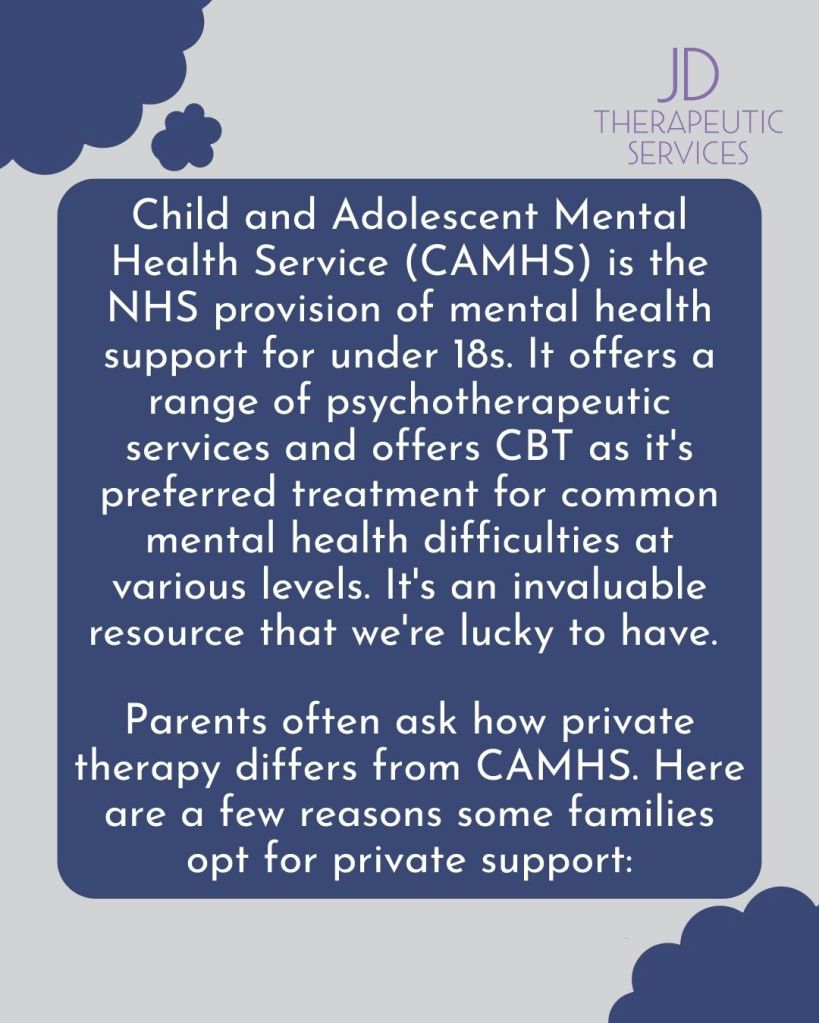
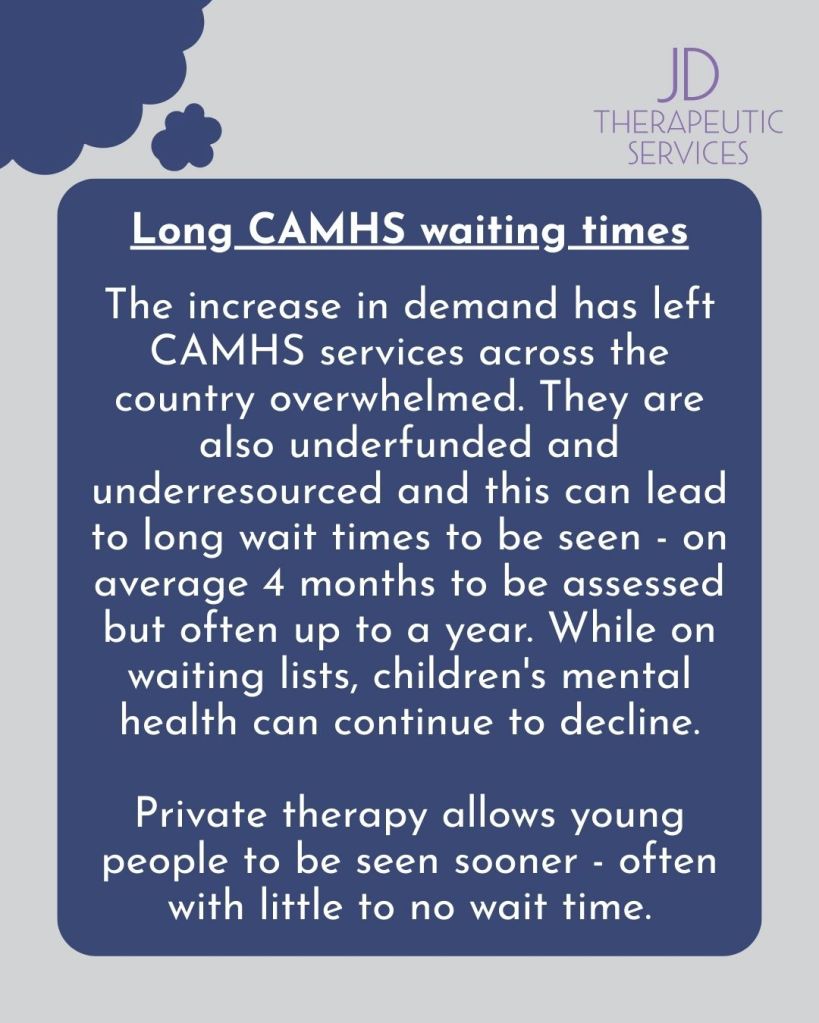
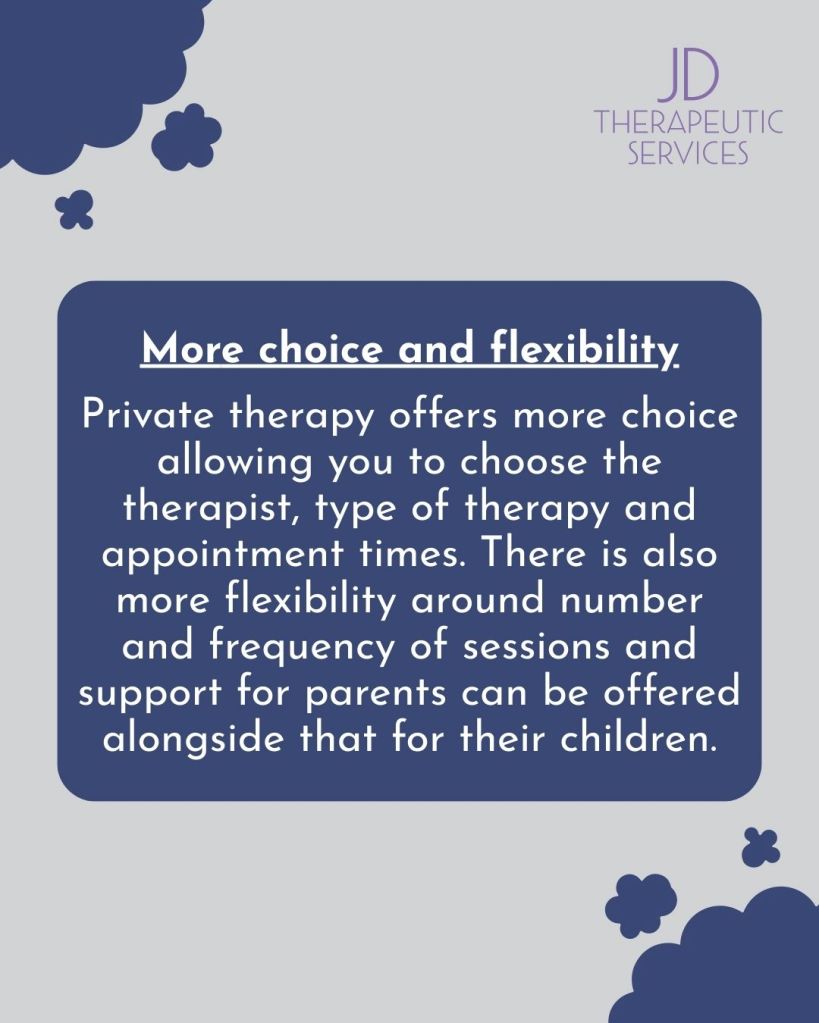
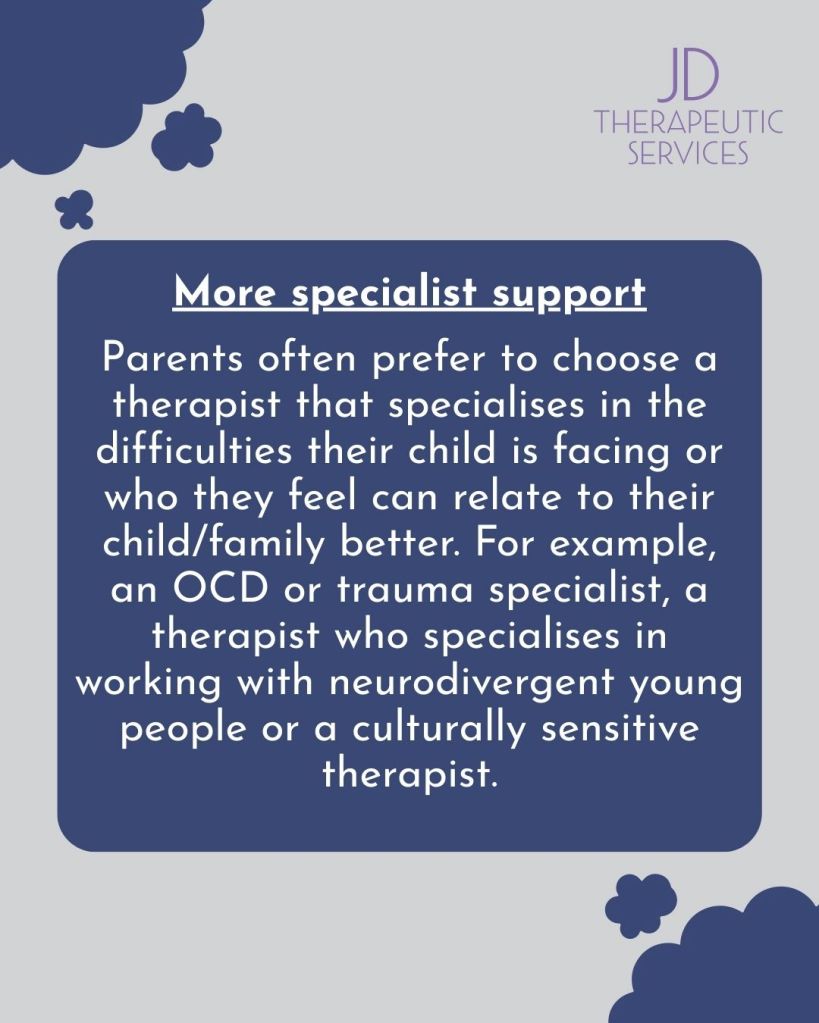
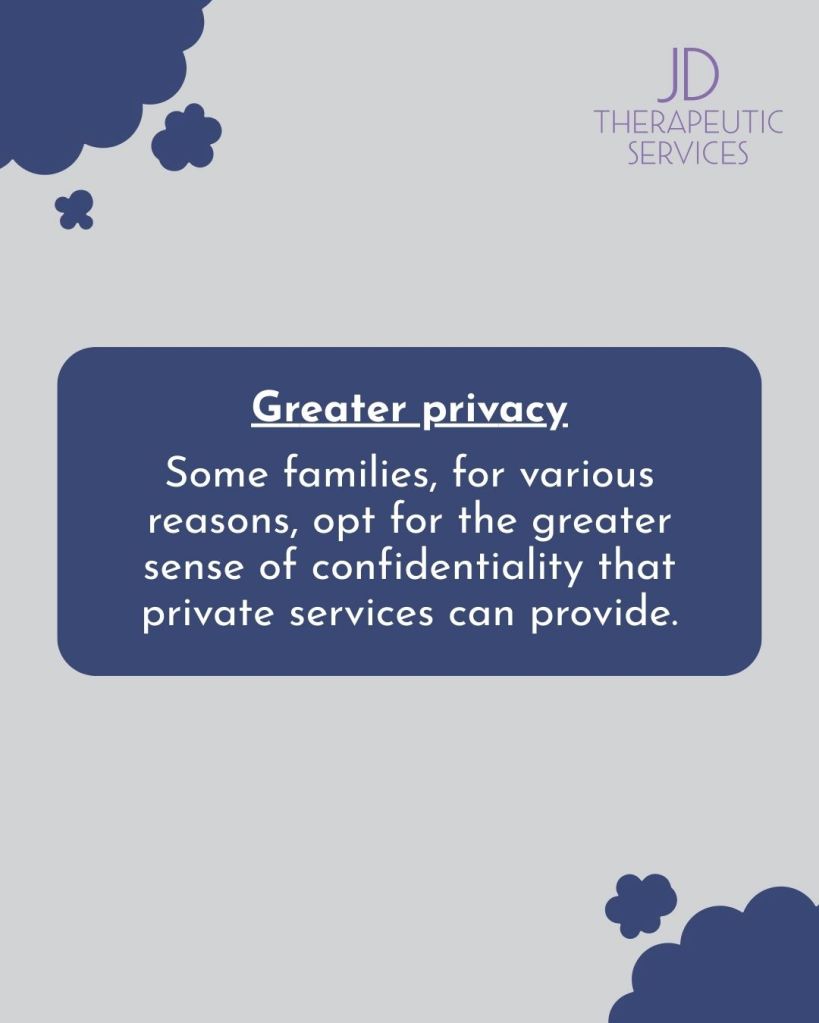
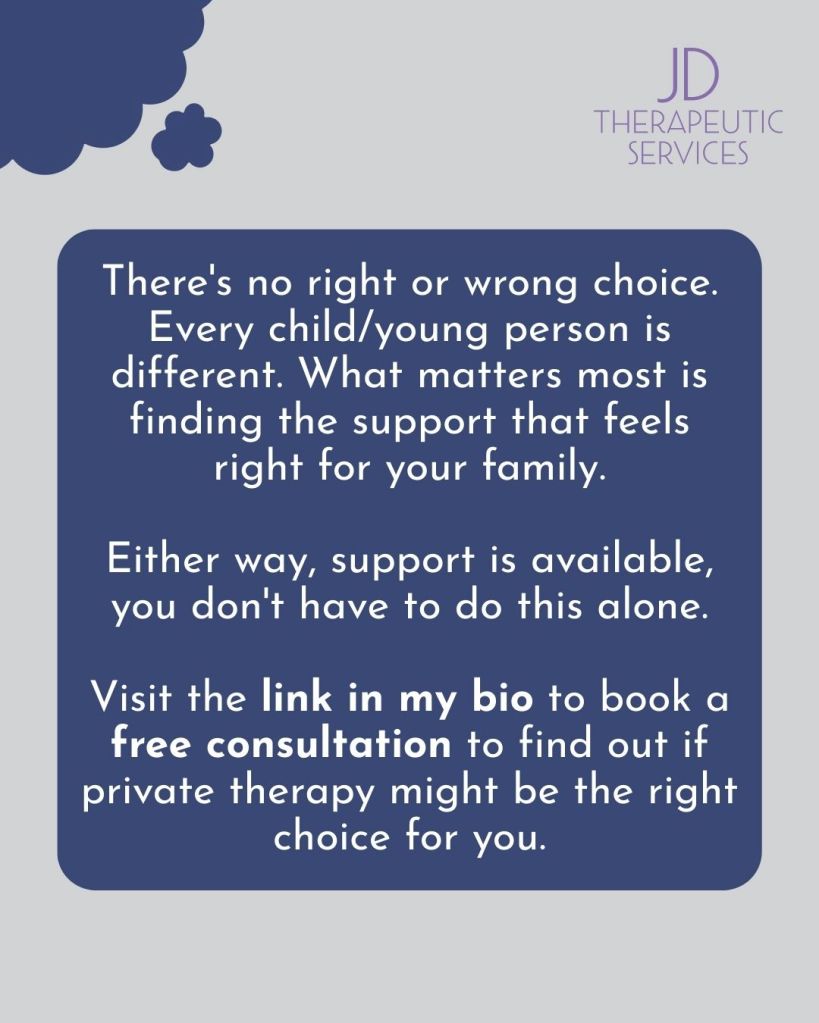
Private therapy might not be the right fit for every family but what matters most is finding the right therapist: someone who is flexible, realistic, and able to work with your family’s needs rather than expecting you to fit into a rigid system.
I’ve tried to make my service as accessible and supportive as possible for the families who need it. That includes:
- Concession fees available for families accessing Free School Meals or Universal Credit, offered on a sliding scale and discussed during consultation.
- Saturday morning consultation appointments to make reaching out feel more manageable around busy family life.
- Short and longer-term therapy options depending on your child’s needs and goals. Therapy is usually measured in months rather than years, with many young people attending around 12–20 sessions.
- Neurodiversity-affirming support that adapts therapy to your young person, rather than expecting them to mask or fit a one-size-fits-all approach.
- Self-referral for over-16s, so older teenagers and young adults can take a more active role in accessing support while still encouraging parental involvement where appropriate.
- Between-session support, including liaising with schools, GPs and other professionals when needed, because supporting a young person often requires a team approach.
Private therapy is an investment so finding a therapist who truly understands your young person is what makes that investment feel worthwhile.

